How Regional Licensing Variations Shape Algorithmic Personalization in Digital Chance Venues
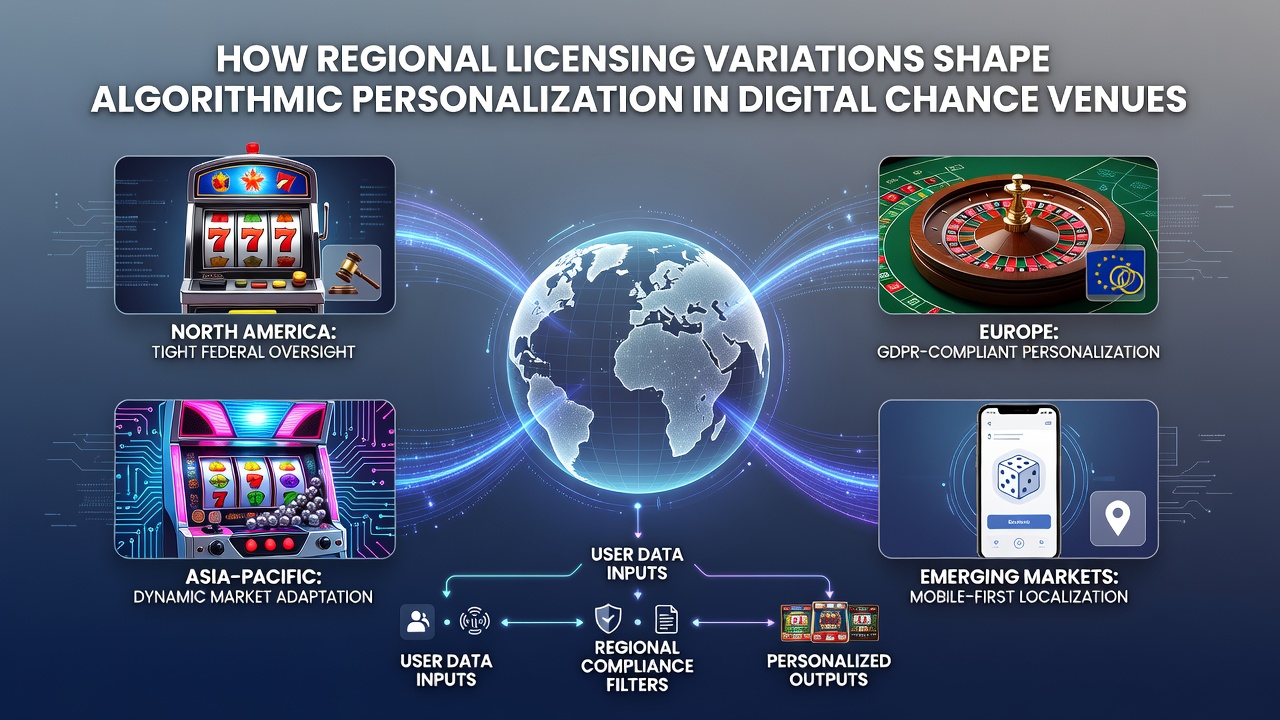
Regional licensing rules establish the boundaries within which digital chance venues operate their personalization systems. These frameworks differ sharply across jurisdictions, dictating what data operators may collect, how algorithms can process user behavior, and which recommendation features reach end users. In practice the result appears in the form of distinct personalization profiles that shift when a single platform serves players from multiple regulatory zones. Licensing bodies in North America, Europe, and Asia Pacific impose requirements on geolocation verification, responsible gaming controls, and data retention periods. Each of these elements directly constrains the variables an algorithm may use when generating tailored game suggestions or bonus offers. Platforms therefore maintain separate rule engines that activate according to the detected licensing jurisdiction of each session.Core Licensing Elements That Influence Algorithms
Most licensing regimes specify limits on real-time behavioral tracking. Some jurisdictions require explicit opt-in consent before any cross-session profiling occurs, while others permit broader collection provided certain transparency standards are met. Algorithms adjust their weighting of recent spins, session duration, and deposit patterns accordingly.
Data storage duration also varies. Shorter retention windows force personalization engines to rely more heavily on immediate session signals rather than long-term preference histories. This shift produces more conservative recommendation sets in regions with strict deletion mandates.
Technical Adaptations Across Platforms
Operators respond by segmenting their backend infrastructure. Separate micro-services handle personalization logic for each licensing cluster, ensuring compliance without disrupting global operations. Machine learning models undergo jurisdiction-specific fine-tuning so that output probabilities remain within permitted ranges.
June 2026 brought new reporting obligations in several U.S. states that further refined these segmentation practices. Platforms updated their consent modules to capture granular permissions for each algorithmic feature, creating auditable logs that regulators could review on demand.
Regional Contrasts in Personalization Outcomes
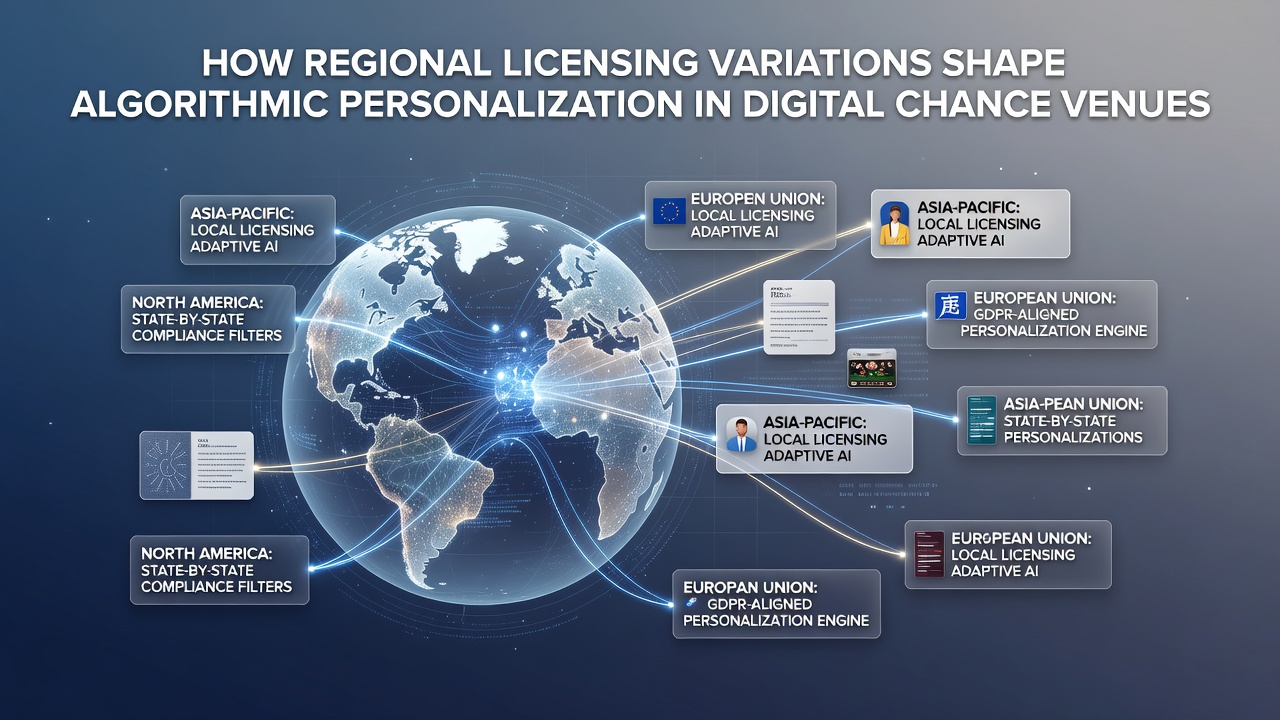
European Economic Area frameworks emphasize user control over algorithmic decisions. Operators must provide mechanisms that let players inspect and reset the data points driving their recommendations. This transparency requirement leads to simpler feature sets compared with markets that allow more opaque modeling.
In contrast, certain Australian state licenses focus on harm-minimization metrics. Algorithms in those environments receive explicit instructions to deprioritize high-volatility titles for users exhibiting rapid deposit patterns. The result surfaces as noticeably different game carousels when the same user accesses the platform from different locations.
Canadian provincial regulators have introduced data-localization rules that keep raw behavioral logs within national borders. Personalization models therefore train on jurisdiction-specific datasets, producing recommendation distributions that diverge from those generated by globally pooled data.
Industry Data and External Benchmarks
According to figures published by the Australian Gambling Research Centre, platforms operating under the strictest state licenses recorded a 14 percent reduction in cross-category game suggestions during the first half of 2026. The same study noted that personalization depth, measured by the number of distinct variables per user profile, declined by roughly one-fifth in those markets.
Research from the University of Nevada, Reno examined how licensing variations affect engagement metrics. Their analysis of anonymized session logs indicated that users in jurisdictions with tighter data-retention rules encountered 22 percent fewer repeated recommendations over a 30-day window compared with users in more permissive zones.
Future Trajectories for Algorithm Design
Platform teams continue to develop modular architectures that isolate jurisdiction-specific rules from core recommendation logic. These designs allow rapid updates when licensing terms change without requiring full model retraining. Observers note that the approach reduces compliance overhead while preserving the ability to deliver relevant experiences within each regulatory envelope.
Conclusion
Regional licensing variations function as structural constraints that reshape how personalization algorithms operate inside digital chance venues. Differences in data collection, retention, and transparency mandates translate directly into divergent recommendation patterns across markets. As regulatory environments evolve, operators maintain segmented systems that adapt personalization outputs to each jurisdiction's requirements while sustaining platform functionality on a global scale.