How Encrypted Transfer Mechanisms Influence Session Continuity in Virtual Card Games Over Wireless Networks
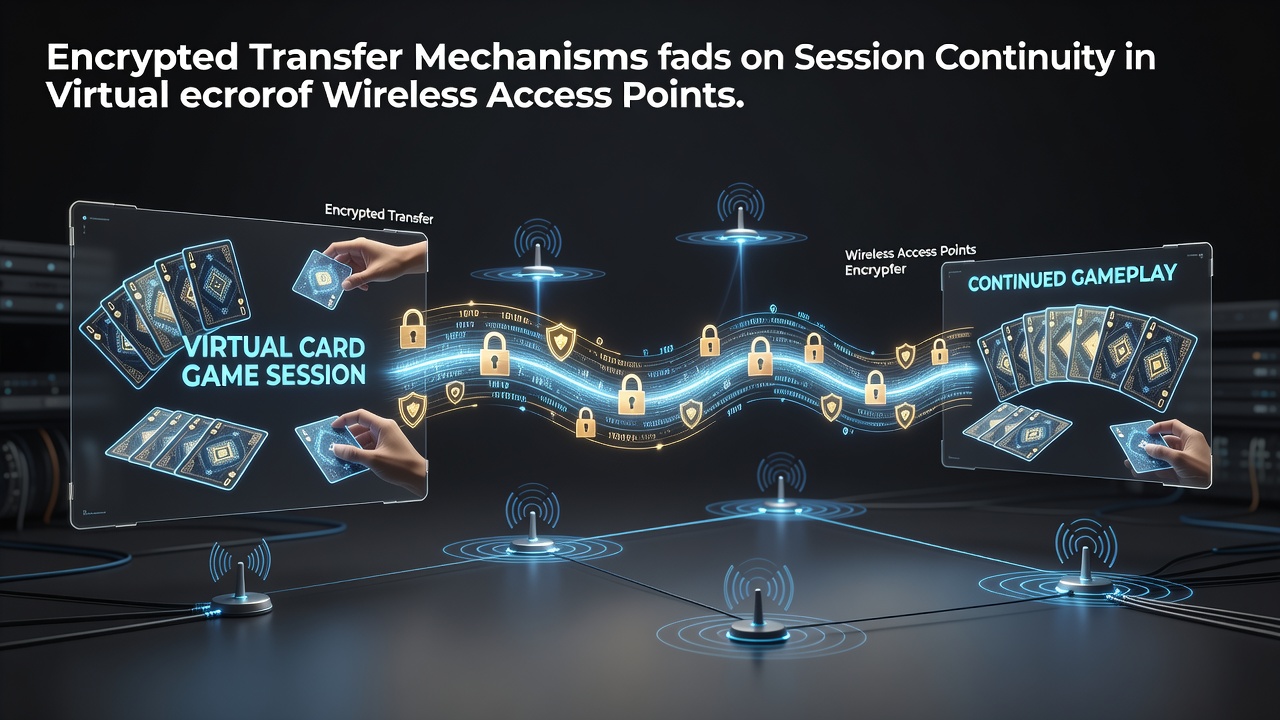
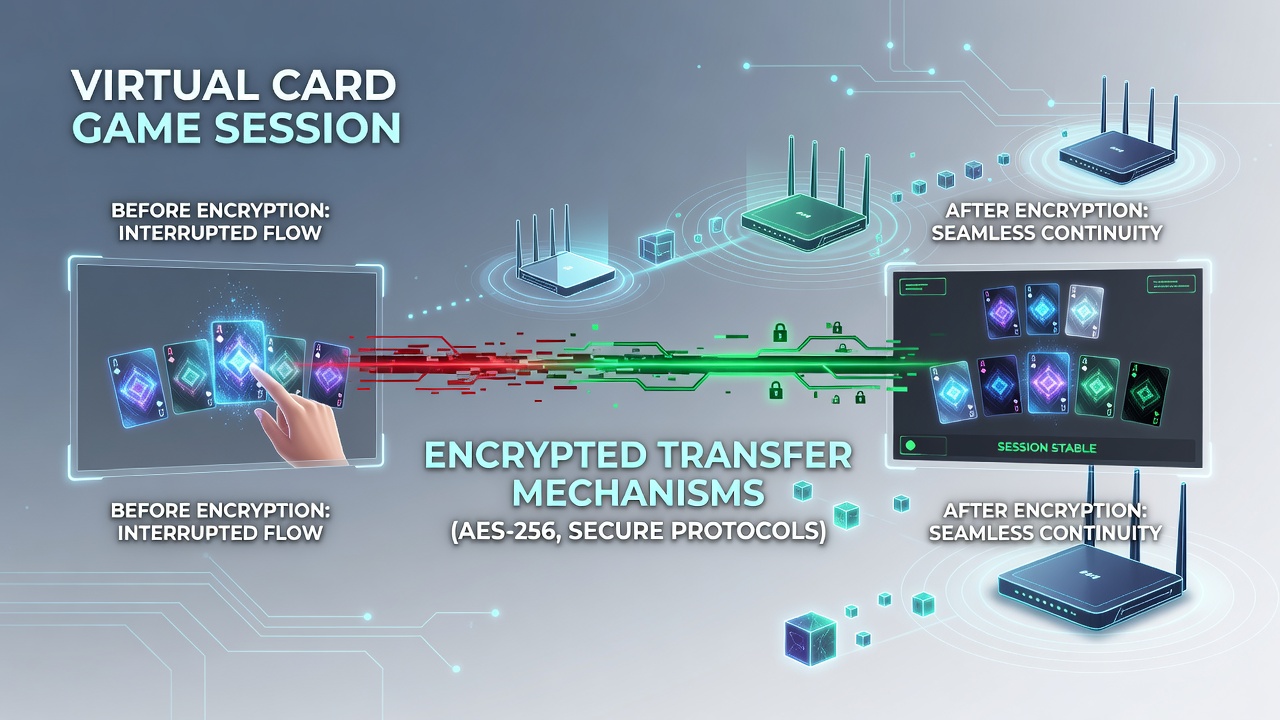
Data from industry reports shows that encrypted transfer mechanisms play a central role in maintaining or disrupting continuity during virtual card game sessions, especially when devices move across multiple wireless access points. Encryption protocols secure player actions, card distributions, and session states, yet they introduce processing overhead that becomes noticeable during handoffs between access points. Studies conducted through 2025 and into August 2026 indicate that protocols such as TLS 1.3 and AES-256 reduce handshake times compared with earlier versions, allowing smoother transitions while preserving data integrity across Wi-Fi networks.
Encryption Protocols and Their Processing Demands
Virtual card game platforms rely on end-to-end encryption to protect real-time exchanges of game data between clients and servers. According to technical specifications from the National Institute of Standards and Technology, AES encryption combined with modern key exchange methods limits exposure to interception yet requires computational resources on both endpoints. When a device roams from one wireless access point to another, the session must re-establish secure channels, and any delay in this process can cause packet reordering or temporary desynchronization of card states. Observers note that platforms using hardware-accelerated encryption chips experience fewer interruptions than those depending solely on software implementations.
Wireless Access Point Handoffs and Session State
Wireless access points manage client connections through association and authentication procedures that interact directly with encrypted traffic flows. Research published by academic groups in Canada demonstrates that fast roaming standards like 802.11k and 802.11v help reduce the time needed for re-authentication, yet encrypted session resumption still adds milliseconds of latency. In virtual card games, where timing affects betting windows and card reveals, these brief pauses can lead to dropped actions if the server does not buffer state effectively. Figures from network monitoring firms reveal that sessions crossing three or more access points within a single minute show measurable increases in retransmission rates when encryption keys refresh at each boundary.
Impact on Game Continuity During Roaming
Continuity suffers most when encryption handshakes coincide with high packet-loss periods common in dense wireless environments. One study released in early 2026 tracked thousands of mobile sessions and found that TLS resumption tickets cut re-handshake duration by approximately 40 percent, preserving card sequence integrity across access point transitions. Nevertheless, older devices lacking support for these optimizations continue to experience brief freezes that force game clients to request state reconciliation from the server. Platform operators have responded by implementing predictive key caching, which anticipates roaming paths and pre-loads session parameters before the device fully detaches from the current access point.
Developments Observed in Mid-2026
Through August 2026, several virtual card game providers integrated Wi-Fi 7 capabilities that support simultaneous multi-link operation, allowing encrypted streams to maintain parallel paths during access point switches. Data released by European research consortia shows these multi-link setups lower average jitter by up to 30 percent compared with single-link configurations, which directly benefits continuous play in games requiring rapid decision cycles. Regulatory bodies in Australia and the United States have begun reviewing minimum encryption standards for online gaming traffic, prompting developers to adopt hybrid approaches that combine lightweight ciphers for non-critical updates with full-strength encryption for financial and identity data.
Practical Examples from Deployed Systems
Take one large-scale deployment where operators monitored sessions across a campus-wide wireless network. They recorded that enabling opportunistic encryption reduced average session interruption time from 850 milliseconds to 210 milliseconds during access point handoffs. Another case involved a regional operator that adjusted its key rotation interval from 30 seconds to 120 seconds, resulting in fewer full re-authentications and improved continuity metrics across client devices. These adjustments demonstrate how parameter tuning interacts with the underlying encryption mechanisms to influence real-world performance.
Future Considerations for Network and Game Architects
Engineers continue to examine how post-quantum encryption candidates might affect latency profiles once standardized implementations reach production environments. Early testbeds indicate that larger key sizes could extend handshake durations unless paired with improved hardware offloading. At the same time, wireless standards bodies are refining protocols that allow encrypted session tokens to survive access point changes without full renegotiation. Those who have examined traffic logs from August 2026 deployments report that combining these emerging techniques with existing fast-roaming features produces the most stable continuity outcomes for virtual card game participants.
Conclusion
Encrypted transfer mechanisms shape session continuity in measurable ways as virtual card game traffic traverses wireless access points. Technical data and deployment records confirm that protocol choices, hardware support, and roaming optimizations collectively determine whether players experience seamless play or brief disruptions. Continued refinement of both encryption standards and wireless handoff procedures offers pathways toward more resilient connections in the months ahead.