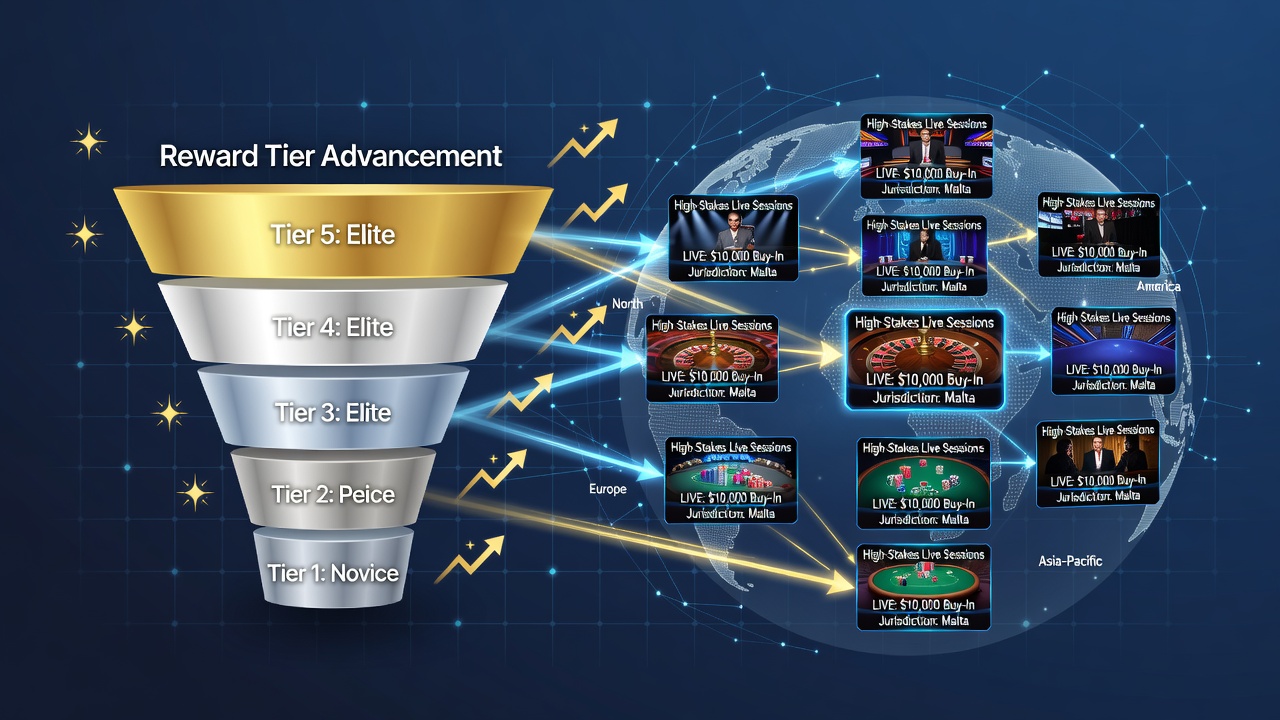
Exploring Correlations Between Reward Tier Advancements and Selection of High-Stakes Live Sessions in Multi-Jurisdictional Online Environments
Data from multiple jurisdictions shows clear patterns linking loyalty program progression to increased participation in high-stakes live dealer sessions, particularly in environments where operators serve players across state lines and international borders. Reward tiers function as structured advancement systems that grant escalating benefits such as cashback percentages, exclusive event access, and personalized game invites, and these mechanisms appear to influence session selection when players reach mid-level and upper-level status.
Reward Structures Across Platforms
Operators in regulated markets build tier systems around metrics like total wagers, session frequency, and game type participation, with live dealer offerings often carrying weighted values that accelerate advancement. In multi-jurisdictional settings, platforms adjust these systems to comply with varying rules on bonus structures and player incentives while maintaining consistent progression logic for users who move between regions. Figures released in July 2026 indicate that players who crossed into the third tier of major programs increased their average stake per live session by measurable margins compared to lower-tier counterparts.
Studies tracking account activity across platforms licensed in different areas reveal that tier upgrades coincide with shifts away from standard table minimums toward premium live environments featuring higher entry points. These environments include dedicated high-limit rooms for games such as blackjack and roulette where minimum bets start at elevated thresholds. The correlation strengthens when platforms offer tier-specific promotions that apply directly to live dealer play rather than slot or virtual table options.
Jurisdictional Variations in Player Behavior
Regulatory frameworks in the United States, Canada, and parts of Europe shape how operators present reward incentives and live session access. Platforms serving multiple U.S. states must align tier benefits with each jurisdiction's advertising and bonus restrictions, which sometimes results in segmented promotion delivery that still funnels eligible players toward high-stakes live options. American Gaming Association reports document rising live dealer volumes in states with mature online markets, noting that loyalty program participants account for a disproportionate share of premium table activity.
Canadian provincial frameworks and Maltese licensing regimes apply different caps on promotional mechanics, yet data collected across these regions shows similar movement toward high-stakes live sessions once players achieve advanced reward status. Observers note that cross-border players often maintain consistent tier progression across platforms, carrying behavioral patterns that favor elevated live stakes when eligibility criteria are met. July 2026 metrics from combined market analyses further highlight that tier advancement timelines shortened in several jurisdictions following updates to live dealer integration features.
Observed Patterns in Session Selection
Account-level tracking demonstrates that once players unlock mid-tier benefits, their selection of live sessions skews toward tables with higher minimums and faster pace options. This shift occurs alongside increased use of tier perks such as reduced rake or priority seating in live dealer lobbies. Platforms that operate across multiple regulatory zones report that players who advance through tiers also exhibit longer session durations specifically on live tables, suggesting that the combination of status recognition and high-stakes access sustains engagement.
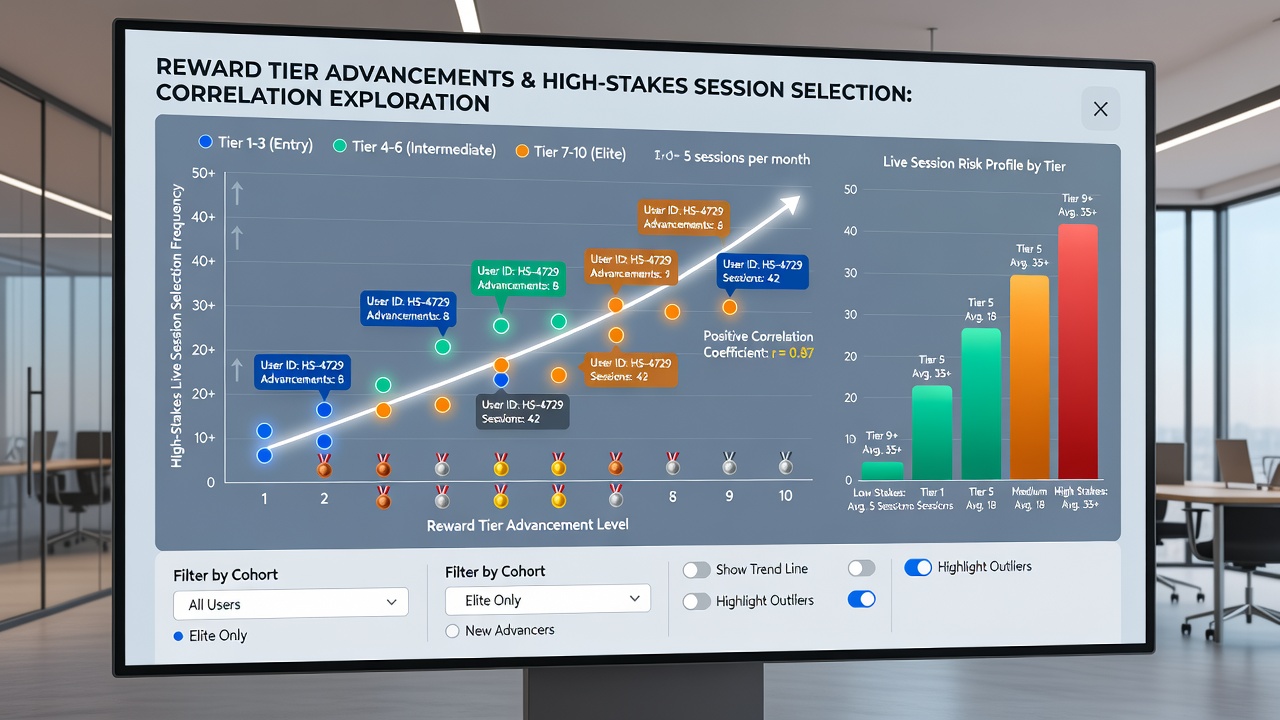
Additional analysis from industry datasets points to correlations between specific reward milestones and game type preferences. Players reaching upper tiers more frequently select live baccarat and blackjack variants with elevated betting limits, while lower-tier users remain distributed across a broader mix of table stakes. These patterns hold across operators that serve both domestic and international player bases, although exact percentages vary according to local tax and compliance requirements.
Data Trends from Recent Periods
July 2026 reporting periods captured increased live dealer traffic coinciding with seasonal tier reset cycles in several multi-state and multi-country platforms. Researchers examining anonymized transaction records found that players who completed tier advancement requirements within the prior quarter showed elevated average bet sizes in subsequent live sessions. The relationship appears bidirectional in some datasets, with high-stakes live participation also feeding back into faster tier progression due to higher wager volumes.
Cross-jurisdictional operators have implemented unified loyalty ledgers that allow seamless tier maintenance for users switching between licensed domains, and this infrastructure supports continued selection of premium live content. External industry reviews from sources such as the Canadian Gaming Research Network have documented parallel trends in markets where live dealer expansion occurred alongside refined loyalty mechanics.
Conclusion
The documented correlations between reward tier advancements and high-stakes live session selection persist across varied regulatory landscapes, supported by consistent data points from multiple reporting periods including July 2026. Operators continue to refine tier structures to align with jurisdictional requirements while preserving the observed linkage between status progression and premium live table engagement. These patterns provide measurable indicators for platform analytics teams monitoring player movement within multi-jurisdictional online environments.